Today, on the 29th of August, 2019 , we , New Generation Development company celebrate our 8th Anniversary ! 8 years of love , hope , work , brotherhood between all of us , and most importantly , the sense of being part of a family , which is something very rare to have nowadays !! We are unique not only for the work we do , but for our gorgeous team .We are not colleagues only , we are family . That’s what’s makes us different from any other company .Besides of course our offers and work that had spread nearly everywhere .
TIA Top Interactive Agencies
TIA is a curated source of digital agencies ecosystems and interactive industry coverings. They focus on bringing together professional and passionate creatives from a diverse range of backgrounds.
And also providing a global perspective that encourages an open exchange from practitioners around the world.
Their mission
Curating a selection of the most interesting digital profiles in the world, including
Founders
CEOs
Art Directors
Creatives and Marketing Leaders among other professionals.
Their Vision
Gathering all the interactive agencies together to be available for serious clients whom are searching for top agencies in all business fields
In order to do so in the best way possible, they took into consideration what users are looking for when they visit www.topinteractiveagencies.com and created a directory to offer professional and passionate creatives a global perspective of the best and most innovative agencies organized by categories.
Best digital and interactive agencies, Interviews, Upcoming events and Articles, are just a bit of what you can find on TIA. Take a look now and check our profile on TIA
http://www.topinteractiveagencies.com/digital/agency/africa/new-generation-development-company/
Things to know about TIA web (Top Interactive Agencies)
(TIA) is a resource with focus on digital agencies, with over 1000 agencies listed from more than 80 countries.
You can select them by location, if you want the nearest, or you can also use tags to find the one that is an expert in the field you are interested in.
Free access, don’t need to register
Team is so supportive and quick responding for your requests
Pro-working vs Co-working How They Compare
Pro-working created to fill a gap in the market that appeared last year, when the co-working trend hit its peak. Many long-established and professional businesses became conscious of the benefits that sharing a workspace has to offer: collaboration, networking and exchanging skills and knowledge. The problem they faced was that many locations on the market just didn’t fit with their identity; they are preparing towards younger, more informal startups and lacked a formal space in which to meet clients. Pro-working is targeting at professionals who want their work-space to match their image. Think of it as co-working’s mature older sibling.
Pro-working and co-working
are two fairly new concepts, but how do they compare and what do they offer? Here we give a rough guide as to what you can expect from either solution. Co-Working
Co-working
is now a very familiar concept in the work place sector. The flexible office model is primarily known for hosting freelancers and start-ups. Co-working communities are typically comprise of young, trendy, tech and media entrepreneurs.
The space normally consists of a shared office environment where tenants have access to meetings rooms and communal break out areas. Co-workers can also attend events organised by the office provider, join a yoga session or even take a nap.
Now that companies operating on a more traditional structure are learning about the benefits of sharing workspace with like-minded businesses, the market is looking to accommodate their needs.
Pro-Working
As much as pro-working is a play on co-working, it has actually evolved from a typical serviced office set up, but with the added element of five star “hotel hospitality”.
In addition to that, the pro-working offering is inspired by the community spirit that co-working has brought to modern office life. Thus, pro-working presents itself as a formal alternative.
This unofficial term has only recently is gradually distinguishing itself from the other options on the market. Providers aim to push serviced offices to the next level by offering high-end business lounges, a concierge service and on-site management with hotel/hospitality backgrounds.
Pro-working aims to allow formal businesses to create communities with like-minded professionals. Co-working made this transition effortless for lone workers and small companies who depended on flexible work options.
Conclusion:
Co-working remains primarily geared towards media and tech companies. The set-up is an idea choice for start-ups and entrepreneurs looking to establish themselves in a fun and vibrant atmosphere. For those wanting to experience the community aspect in a formal environment, pro-working may be a more suitable fit. Whatever you choose, it should go hand in hand with the company culture and brand.
The Security Princess of Google Chrome
Chrome is a free Internet browser officially released by Google on December 11, 2008.
Its features include synchronization with Google services and accounts, tabbed browsing, in-browser translation and spell check.And its integrated address bar/search bar called the Omnibox.
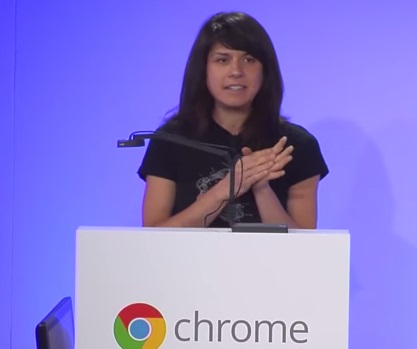
Google’s princess guardian angel (Parisa Tabriz)
Being the popular browser, one of the main priority for Google Chrome is to provide a safe browisng experience. As a window to the online world, a browser is where we expose all our information, and for the same reason, it is more prone to attacks. This is where Parisa Tabriz comes into action.
Her job
This 30-something lady is the reason why you are able to browse on Chrome securely. Tabriz and her team of 30 security engineers hack into Chrome to find out any bugs or loopholes before the cyber criminals and fix them. Her team is also responsible, for those warnings that let you know that you’re about to visit a potentially harmful site.
A whiz-hacker
After graduating in 2007 from University of Illinois, Tabriz started working at Google in 2012 as part of a small “hired hacker” team, and from then on there was no stopping for her. She was even listed in Forbes Magazine’s 30 people under 30 to watch in the technology industry.
What’s with the designation
As one of the few women in such roles within Google, the Iranian-American titled herself ‘Security Princess’ while on a conference in Tokyo.
“I thought Information Security Engineer sounded so boring. Guys in the industry all take it so seriously, so security princess felt suitably whimsical,” she told the Telegraph in 2014.
Thinking like a criminal
As one of Google’s top hackers, she thinks like a cyber criminal. Tabriz usually gives seminars to fresh ‘white hat hackers’, working to protect the search engine. In her first class, she asks students how they would hack into a vending machine for chocolate without using technology.
Social Media marketing Is a Toxic Mirror
We’ve long understood that movies, magazines and television damage teens’ body image by enforcing a “thin ideal.”
With the rapid aging down of social media marketing and smart phone ownership, most parents spend “digital parenting” time on character coaching, making sure their kids think before they post and refrain from cyber-bullying.
Not anymore. Social media has also become a toxic mirror:
Earlier this year, psychologists found robust cross-cultural evidence linking social media use to body image concerns, dieting, body surveillance, a drive for thinness and self-objectification in adolescents. Note: that doesn’t mean social media cause the problems, but that there’s a strong association between them.
Visual platforms for social media marketing
like Facebook, Instagram and Snapchat deliver the tools that allow teens to earn approval for their appearance and compare themselves to others.
The most vulnerable users, researchers say, are the ones who spend most of their time posting, commenting on and comparing themselves to photos.
One study found that female college students who did this on Facebook were more likely to link their self-worth to their looks. Interestingly, while girls report more body image disturbance and disordered eating than boys—studies have shown both can be equally damaged by social media.
All this provides an illusion of control: if I spend more time and really work at it, I can improve at being beautiful. “I don’t get to choose how I’m going to leave my apartment today,” one young woman told me. “If I could, my body would look different. But I can choose which picture makes my arms look thinner.”
But invariably, the line between a “like” and feeling ranked becomes blurred.
What teens share online is dwarfed by what they consume. Pre-Internet, you had to hoof it to the grocery store to find a magazine with celebrity bodies,or at least filch your mother’s copy from the bathroom. Now the pictures are as endless as they are available.
“wellness” industry (social media channel)
The meteoric rise of the “wellness” industry online has launched an entire industry of fitness celebrities on social media. Millions of followers embrace their regimens for diet and exercise, but increasingly, the drive for “wellness” and “clean eating” has become stealthy cover for more dieting and deprivation. Both contained strong language inducing guilt about weight or the body, and promoted dieting, restraint and fat and weight stigmatization. “I had found wellness,” she wrote. “I was not well.”
Many teens are media-literate about movies and magazines; they take in digitally altered images with a critical eye. Less clear is how social media literate they are. The older adolescents I work with often shrug off conversations about the perils of social media with a “duh” or “I know that already.” That doesn’t mean they’re not listening, or feeling worried that their bodies don’t measure up. (Besides, this population is hardly famous for gushing gratitude for parental advice.)
So what can parents do? Ask teens their opinion of the ways people modify their own appearance online: Why do people do it? What do they gain, and from whom? Sometimes just naming a feeling as normal can make a young adult feel less alone. It never hurts to tell your teen they matter more than their looks.
Social media sites that failed to become Facebook
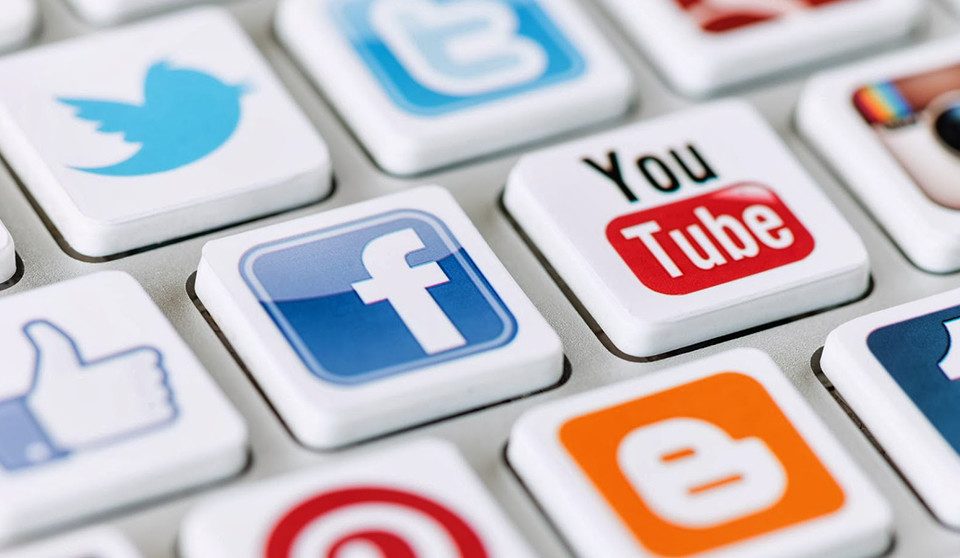
Social media is the collective of online communications channels dedicated to community-based input, interaction, content-sharing and collaboration.Websites and applications dedicated to forums, micro-blogging, social networking, social bookmarking, social curation, and wikis are among the different types of social media.
social media sites are computer-mediated technologies that facilitate the creation and sharing of information, ideas, career interests and other forms of expression via virtual communities and networks. The variety of stand-alone and built-in social media services currently available introduces challenges of definition.
1) Orkut
FOUNDER: Orkut Buyukkokten LAUNCHED: January 2004 PRESENT STATUS: Shut in September 2014
Started by Buyukkokten, a Turkish engineer at Google, Orkut was the result of the search giant’s failure to buy Friendster. Orkut, while not much of a success in the US, proved big in Brazil and India, its two key markets. But in September 2010, Facebook, which debuted two weeks after Orkut’s launch, went past Orkut in terms of number of users in India, and a year later, did the same in Brazil.
Orkut had 19 million users in India and 34 million in Brazil, when it lost the top spot to Facebook. Google fi nally shut Orkut on September 30, 2014.
2) MySpace
FOUNDER: Chris DeWolfe, Tom Anderson LAUNCHED: August 2003 PRESENT STATUS: Active
It may be hard to imagine how big MySpace was. In 2006, it beat Yahoo and Google to become the largest website in the US by page views. Rupert Murdoch’s News Corp had bought it the previous year for $580 million. Its valuation shot up to a staggering $12 billion in 2007, when it had 300 million users.
But it was all downhill for the site from there as Facebook closed the gap with MySpace and became the largest social networking site. News Corp sold MySpace in June 2011 for just $35 million.
3) Friendster
FOUNDER: Jonathan Abrams, Peter Chin LAUNCHED: March 2002 PRESENT STATUS: Shifted to online gaming in 2011 and shut down in June 2015
Within a year of its launch, Friendster had three million users but soon had to contend with the likes of MySpace and Facebook.
It was sold to a Malaysian internet company in 2009 reportedly for $100 million. At the time of the sale, Friendster had around 75 million users in Asia. Friendster turn it into an online gaming platform in 2011 and was disabled four years later.
4) SixDegrees
FOUNDER: Andrew Weinreich LAUNCHED: January 1997 PRESENT STATUS: Shut down in 2001
The start of social media sites which is the first social networking sites along with Classmates, SixDegrees had a user base of 3.5 million at its peak but the limitations of internet connectivity meant it was an idea ahead of its time.
(Youth Stream Media Networks) buy it for $125 million in 1999 and shut down two years later.
5) Hi5
FOUNDER: Ramu Yalamanchi LAUNCHED: June 2004 PRESENT STATUS: Active
Among the most popular social networking sites for a few years after its launch, Hi5 was second only to MySpace in 2007.
It was sold to another social network, Tagged, in 2011 and they were both bought by social discovery platform MeetMe for $60 million earlier this year.
6) Classmates
FOUNDER: Randy Conrads LAUNCHED: December 2005 PRESENT STATUS: Active
Founded as a way to get in touch with your friends from school and college, Classmates still remains just that, with access to decades-old yearbooks from schools across the US.
The website was bought by United Online in 2004 for a $100 million and in 2015 was sold for a third of that price.
7) Google+
LAUNCHED: June 2011 PRESENT STATUS: Active
Smarting from its failed attempts in social networking through Orkut and Buzz, Google decided to take Facebook head-on with Google+. Integrated into Gmail, Google+ tried a slightly different approach to social networking than Facebook, offering users the option of categorising their friends into “circles”.
Learn how the social media affects society and environment
Society influenced by positive and negative Effects of Social Media,The effects of social media on society is somewhat balanced, to be honest. There are many good things about it, and many bad things.
Positive Effects of Social Media
Social networks help the businesses in a variety of ways. Traditional marketing mediums such as the radio, TV commercials and print ads are completely obsolete now and demand for thousands of dollars. Through Facebook, Twitter, LinkedIn or any other social site you can lower your marketing cost to a significant level.
The increasing popularity of social sites like Twitter, Facebook and LinkedIn, social networks has gained attention as the most viable communication choice for the bloggers, article writers and content creators.
Social networking sites have opened the opportunity for all the writers and bloggers to connect with their tech savvy clients to share your expertise and articles.
impact of social networking sites is to unite people on a huge platform for the achievement of some specific objective. This is very important to bring the positive change in society.
Negative Effects of Social Media
One of the negative effect of social media or network is it leads to addiction. Spending countless hours on the social sites can divert the focus and attention from a particular task. It lowers the motivational level of the people, especially of the teenagers and students. They mainly rely on technology and the internet instead of learning the practical knowledge and expertise of the everyday life.
Kids can be greatly affected by these social networking sites if they are allowed to use them. The reason in that sometimes people share photos on social media that contains violence and sex, which can damage the behavior of kids and teenagers. It put the negative impact on overall society as these kids and teenagers involve themselves in crime related activities.
Another downside of the social media is that the user shares too much information which may pose threats to them. Even with the tight security settings your personal information may leak on the social sites.