Online Social Network Addiction

Addiction to online social networking, as well as Internet addiction types in general.Are recent and insufficiently investigate phenomena, frequently discuss and sometimes dispute in the psychiatric literature.

Addiction types could affect the addictive nature of SNS is support primarily by the mental preoccupation of many chronic SNS users who as a result tend to neglect other aspects of their social functioning such as family and offline friends.

In addition, according to our own observations, sudden cessation of online social networking (i.e., lack of Internet connection) may in some chronic users cause signs and symptoms that at least partially resemble the ones seen during drug/alcohol/nicotine abstinence syndrome.

Online social networking as a potential addiction disorder has so far been discuss in many publications. SNS addiction represents a relatively new issue in psychiatry research, and as with other potentially SNS-related disorders, many questions remain unanswered.

In 2012, Andreassen et al. develop the Facebook Addiction Scale, a scoring system initially based on a total of 18 items, testing features of addiction such as salience, mood modification, tolerance, withdrawal, conflict, and relapse.

The authors applied the scale along with other questionnaires (such as Addictive Tendencies Scale, Online Sociability Scale, etc.) on a sample of 423 students.

The test show a relatively high reliability and proved to be applicable to the student population. The same year, regarding this study, Griffiths expressed concern that the term “Facebook addiction” may be obsolete due to a large variety of activities that can do it on Facebook besides conventional social networking (i.e., playing games).

Nevertheless, any attempt to design a scoring system that would be able to quantify at least a certain aspect of social networking addiction is, in our opinion, an important addition to the present knowledge in this field.

Questionnaire addiction

Wolniczak et al. recently adapted The Internet Addiction Questionnaire in order to test Facebook dependence in the student population. The authors also tested the sleep quality of Facebook users using the Pittsburgh Sleep Quality Index.

The results showed that Facebook dependence may be related to poor quality of sleep. To our knowledge, this is the first study to modify existing questionnaires for Internet addiction in order to test Facebook use.

Probably, the most important question is whether SNS addiction is actually a mental disorder, and whether it should  diagnosed and treated as such.

The Tenth Revision of the International Classification of Diseases and Health Problems (ICD-10) defined several specific criteria for dependence syndrome such as a strong desire or sense of compulsion.

Difficulties in controlling consumption behavior, physiological withdrawal state after reduction or cessation, evidence of tolerance, and so on. A diagnosis should made if three or more of the above-mentioned criteria are present (at a certain time point) during the previous year.

Addiction types

It is clear that many of these diagnostic criteria could be apple to a minor percentage of chronic Facebook users who, as a result of this prolong computer use, have problems in normal everyday functioning.

However, one must be very careful with this approach, since in the future it could be quite difficult to distinguish SNS addiction from Internet addiction, which is a much more general disorder (Internet addiction disorder, problematic Internet use, or compulsive Internet use).

Furthermore, it should be note that neither Internet nor SNS addiction include the latest disease classification manuals such as Diagnostic and Statistical Manual of Mental Disorders (DSM-5). In addition, SNS and Internet-relate mental problems are frequently seen together with other diagnose mental illnesses, or, in other words, these problems are complicate by co-morbidity.

Therefore, it remains unclear whether potential SNS addiction is an independent illness, or merely a manifestation of other mental issues such as, for example, personality disorders.

All in all, it remains to see whether SNS addiction will ever be recognizable as a separate mental disorder.

It can be expect that in the future, this issue will be a focal point of many research studies, and that, in the years to come, it will become the subject of a wide debate among psychiatrists, psychologists, and other specialists.

The final results and conclusions will have a substantial impact on the future organization of the mental health system, particularly considering that online social networking affects such a large proportion of the world population.


Media communications channels

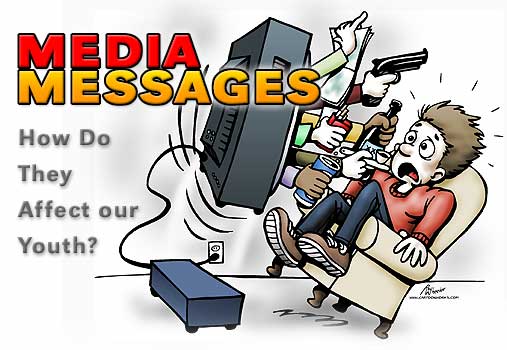
Media communications channels made many parents worry about how exposure to technology might affect toddlers developmentally,and how Social Media Affects Teenagers .

Media communications channels known by preschoolers are picking up new social and cognitive skills at a stunning pace, and we don’t want hours spent glued to an iPad to impede that. But an equally important period of rapid development, and too few of us are paying attention to how our teenagers’ use of technology.
Much more intense and intimate than a 3-year-old playing with dad’s iPhone—is affecting them.

In fact, experts worry that the social media and text messages that have become so integral to teenage life.And promoting anxiety and lowering self-esteem.

Indirect communication

Teens are masters at keeping themselves occupied in the hours after school until way past bedtime. When they’re not doing their homework (and when they are) they’re online and on their phones, texting, sharing, trolling, scrolling, you name it. Of course before everyone had an Instagram account teens kept themselves busy too. But they were more likely to do their chatting on the phone, or in person when hanging out at the mall.

It may have looked like a lot of aimless hanging around, but what they were doing was experimenting, trying out skills, and succeeding and failing in tons of tiny real-time interaction. kids today are missing out on.

Modern teens are learning to do most of their communication while looking at a screen, not another person

“As a species we are very highly attun to reading social cues,” says Dr. Catherine Steiner-Adair, a clinical psychologist and author of The Big Disconnect. “There’s no question kids are missing out on very critical social skills. In a way, texting and online communicating.

it’s not like it creates a nonverbal learning disability, but it puts everybody in a non-verbal disabled context, where body language, facial expression, and even the smallest kinds of vocal reactions are render invisible.”

Lowering the risks

Certainly speaking indirectly creates a barrier to clear communication, but that’s not all. Learning how to make friends is a major part of growing up, and friendship requires a certain amount of risk-taking. This is true for making a new friend, but it’s also true for maintaining friendships. When there are problems that need to be faced—big ones or small ones.It takes courage to be honest about your feelings and then hear what the other person has to say. Learning to effectively cross these bridges is part of what makes friendship fun and exciting, and also scary. “Part of healthy self-esteem is knowing how to say what you think and feel even when you’re in disagreement with other people or it feels emotionally risky,” notes Dr. Steiner-Adair.

But when friendship is conducted online and through texts, kids are doing this in a context stripp of many of the most personal. It’s easier to keep your guard up when you’re texting, so less is at stake. You aren’t hearing or seeing the effect that your words are having on the other person. Because the conversation isn’t happening in real time, each party can take more time to consider a response. No wonder kids say calling someone on the phone is “too intense”—it requires more direct communication.

If kids aren’t getting enough practice relating to people and getting their needs met in person and in real time.

Many of them will grow up to be adults who are anxious about our species’ primary means of communication—talking. And of course social negotiations only get riskier as people get older and begin navigating romantic relationships and employment.

How To Handle Media Influences On Youth

Exposure to media is a part of modern life, but you can help your child identify what is worth spending time and what isn’t and how Handle Media Influences On Youth . Here are some ways to handle the influence of social media on teenagers:

Tips For Parents:

You as a parent have the responsibility to help your teen make the right choices. Here are a few tips to make media a positive influence in your teen’s life:

Learn how the social media affects society and environment

Society influenced by positive and negative Effects of Social Media,The effects of social media on society is somewhat balanced, to be honest. There are many good things about it, and many bad things.

Positive Effects of Social Media

  1. Social networks help the businesses in a variety of ways. Traditional marketing mediums such as the radio, TV commercials and print ads are completely obsolete now and demand for thousands of dollars. Through Facebook, Twitter, LinkedIn or any other social site you can lower your marketing cost to a significant level.
  2. The increasing popularity of social sites like Twitter, Facebook and LinkedIn, social networks has gained attention as the most viable communication choice for the bloggers, article writers and content creators.
  3. Social networking sites have opened the opportunity for all the writers and bloggers to connect with their tech savvy clients to share your expertise and articles.
  4. impact of social networking sites is to unite people on a huge platform for the achievement of some specific objective. This is very important to bring the positive change in society.

Negative Effects of Social Media

  1. One of the negative effect of social media or network is it leads to addiction. Spending countless hours on the social sites can divert the focus and attention from a particular task. It lowers the motivational level of the people, especially of the teenagers and students. They mainly rely on technology and the internet instead of learning the practical knowledge and expertise of the everyday life.
  2. Kids can be greatly affected by these social networking sites if they are allowed to use them. The reason in that sometimes people share photos on social media that contains violence and sex, which can damage the behavior of kids and teenagers. It put the negative impact on overall society as these kids and teenagers involve themselves in crime related activities.
  3. Another downside of the social media is that the user shares too much information which may pose threats to them. Even with the tight security settings your personal information may leak on the social sites.