Measure your success on Snapchat Advertising
Maybe you’re a Snapchat pro, snappin pics of everything from your meals every. single. one. to your cat sleeping. Or, maybe all you know about Snap chat is that people use it to make their faces look like dogs with freakishly long tongues, or like they are throwing up rainbows.
Whatever your level of Snap chat expertise, you can be sure that this is one little dancing ghost that isn’t going to disappear anytime soon, especially for advertisers. Sure, you know that having a Snap chat presence is important—relevancy is paramount. But why should you, as a marketer, give a (insert your favorite four-letter expletive) about Snap chat advertising?
1. It’s about as immersive as you can get
Advertisers are always trying to get themselves in front of the ever-elusive, yet incomparably- valuable millennial audience. Look no further.
According to Nielsen Media, Snapchat reaches 41% of all 18 to 34-year olds in the United States on any given day. One of the app’s most distinct and beloved features are Snapchat Lenses. If you have ever been on Snapchat and had your face turned into something else, you’ve used the lenses feature. Snapchat’s powerful facial recognition technology allows users to simply tap on their faces in selfie mode, and transform into everything from an angelic deer to a 90-year-old man, complete with wrinkles and a monocle.
Brands are realizing the real opportunity behind Lenses, because in the pursuit of engaging advertising, what could be more immersive than literally changing your customer’s face?
2. It allows you to be in the moment
As marketers, we know that the recipe for campaign success requires four crucial ingredients; the right audience, the right place, the right message and the right time. Snapchat allows advertisers to place Lenses, and their cousin ad-type, Filters.
Also available to advertisers looking to catch the eyes of customers during opportune moments are Snap Ads. This ad type runs in between stories, and allows them to naturally view your ad without interrupting their browsing. And, if they are curious about your message, they can simply swipe up for extended content. Recently, brands like Netflix have leveraged this placement to advertise the release of new series.
The Final Chapter, Snapchat promoted Filters, Lenses and Snap Ads can be strategically placed to run during the moments where they will be most relevant.
On Super Bowl Sunday last year, Gatorade released a sponsored lens that allowed users to dunk a virtual Gatorade cooler over their video selfies. With more than 165 million views, the Lens was a splashing success. Aside from being highly relevant, the ad allowed users to interact with an event that they otherwise would only be spectators of,By allowing users to be a part of the moment, in the moment, Gatorade managed to score the most successful Snapchat campaign of all time—a title they held for months after the fact.
Snapchat promoted Lenses and Filters allow your brand to get in front of customers during the moments that matter most to them.
3. It gets your customers talking
One of the most exciting aspects of Snapchat advertising, especially with features like Filters, Lenses, is that the entire purpose of using them is to then share those pictures with friends. The trickle-down effect of Snapchat is hard to compete with—aside from popular video ads like those featured during the Super Bow,there are few other times where consumers share your ad for sheer entertainment—and so, if one user sends a snap to all their friends using a memorable Lens or Filter, it’s going to start a conversation.
The trans-formative Lens ad shattered records for the app, resulting in 224 million views in one day, with the average user playing back the ad for 24 seconds before sending it as a snap—to gauge, that’s 12.5 years worth of play in a single day, according to Snapchat data.
The conversation didn’t start and end within the Snapchat app, either. Users were sharing their thoughts about Taco Bell’s Lens ad on Twitter and Facebook as well.
Even better—Snapchat allows users to save their snaps, so they can continuously share them through whatever platform they chose. How’s that for keeping the conversation going?
Why advertise on Snapchat?
- It’s completely immersive
- It lets your brand be a part of big moments
- It gets people talking.
Not to mention, its sharing capabilities and facial recognition technology make it truly a one-of-a-kind platform.
Online Marketing and Advertising campaigns
Advertising campaigns in online marketing are built to accomplish a particular objective or a set of objectives. Such objectives usually include establishing a brand, raising brand awareness, aggrandizing the rate of conversions/sales. The rate of success or failure in accomplishing these goals is reckoned via effectiveness measures. There are 5 key points at which an advertising campaign must consider to ensure an effective campaign. These points are, integrated marketing communications, media channels, positioning, the communications process diagram and touch points.
Integrated marketing Communication: (IMC)
is a concept approach used by majority of organisations to develop a strategic plan on how they are going to broadcast their marketing and advertising campaigns. Nowadays there has been a shift in the way marketers and advertisers interact with their consumers and now see it as a conversation between Advertising/ Marketing teams and consumers. IMC has emerged as a key strategy for organisations to manage customer experiences in the digital age. The more traditional advertising practices such as newspapers, billboards and magazines are still used, but fail to have the same effect now as they did in previous years.
Advantages of using IMC are that it has the ability to communicate the same message down several channels to create brand awareness. IMC is the most cost effective solution when compared to mass media advertising to interact with target consumers on a personal level.IMC also benefits small businesses, as they are able to submerge their consumers with communication of various kinds in a way that pushes them through the research and buying stages creating a relationship and dialogue with their new customer. Popular and obvious examples of IMC put into action are the likes of direct marketing to the consumer that the organisation already has a knowledge that the person is interested in the brand by gathering personal information about them from when they previously shopped there and then sending mail, emails, texts and other direct communication with the person. In store sales promotions are tactics such as ‘30% off’ sales or offering loyalty cards to consumers to build a relationship. Television and radio advertisement are also a form of advertising strategy derived from IMC. All of the components of IMC play an important role and a company may or may not choose to implement any of the integration strategies.
Media Channels
Media channels are also known as marketing communications channels and are used to create a connection with the target consumer. Traditional methods of communication with the consumer include newspapers, magazines, Radio, television, billboards, telephone, post and door to door sales to name a few traditional methods. Some of these traditional methods are still very effective for some industries and not so for others. For instance advertising in a newspaper to target consumers in the age range of 15-25 does not have a very effective result, as this target market is unlikely to be flicking through their local newspaper.
With advancements in digital communications channels, marketing communications allow for the possibility of two-way communications where an immediate consumer response can be elicited. Digital communications tools include: websites, blogs, social media, email, mobile, and search engines as a few examples. It is important for an advertising campaign to carefully select channels based on where their target consumer spends time to ensure market and advertising efforts are maximised
Modern day implications to the advantages & disadvantages of traditional media channels
In the rapidly changing marketing and advertising environment, exposure to certain consumer groups and target audiences through traditional media channels has blurred. These traditional media channels are defined as print, broadcast, out-of-home and direct mail.[The introduction of various new modern-day media channels has altered their traditional advantages and disadvantages. It is imperative to the effectiveness of the Integrated Marketing Communication (IMC) strategy that exposure to certain demographics, consumer groups and target audiences is anticipated to provide clarity, consistency, and maximum communications impact.
Print media is mainly defined as newspapers and magazines. With the transition in last decade [2006 – 2016] to digital information on phones, computers and tablets, the demographic that still are exposed to traditional print media is going to be older. It is also estimated that there will be a reduction of print material in coming years . This has to be taken into account by the advertisers and in some cases they could use this to their advantage. Newspapers advantages would be that it is low cost, timely, reader controls exposure and has moderate coverage to the older generations in western society. Disadvantages would obviously be the aging demographic, short life, clutter and low attention-getting capabilities. Magazines are similar in some cases but have defined differences as they are a niche product increasing segmentation potential; they also have high informational content and longevity. Disadvantages are they are visual only, lack of flexibility and a long lead time for advertisement placement.
Traditional broadcast media’s primary platforms are television and radio. These are still relatively prominent in modern-day society, but with the emergence of online content such as YouTube, Instagram and Vine it would difficult to anticipate where the market is headed in the next decade. Televisions advantages are that it has mass coverage, high reach, quality reputation, low post per exposure and impacts human senses. Disadvantages would be that it has low selectivity, short message life and high production costs. Alternatively, radio offers flexibility, high frequency and low advertising & production costs. Disadvantages to radio are that its audio only, low attention-getting and short message.
Out-of-home (OOH) media a broad marketing concept that is no longer relegated to large, static billboards on the side of motorways. More current and innovative approaches to OOH media range from street furniture to aerial blimps. Due to the constant and contemporary nature of the outdoors there will always be new ways in which a campaign can revitalize this media channel. Advantages would be the accessibility and reach, geographic flexibility and relatively low cost. Disadvantages to OOH media are that it has a short life, difficult to measure / control and it can convey poor brand image.
Direct mail is classified as messages sent directly to consumers through the mail delivery service. One of the more ‘dated’ media channels and in the modern day has very little advantages, other than it is highly selective and has high information content. Disadvantages are that it promotes a poor brand image – junk mail and that it has a high cost to contact ratio.
online-marketing shapes the future of marketing
Online-marketing is part of digital advertising which is the future cause it is fast, effective and cheap. Companies should be making full use of it or risk being left behind. Here are seven things you should know about the future of digital advertising.
-
Mobile is massive(online-marketing/mobile marketing)
More users are interacting with digital via mobile devices. Consumers are using their phones for everything: shopping, researching, reading the news, surfing the web. Advertising in traditional media such as newspapers, TV, and magazines is in freefall, while digital advertising continues on an upward trajectory.
We’re constantly hearing that this is the age of mobile, as mobile becomes bigger and better. It’s where consumers are, so mobile-first is the new way of thinking when it comes to advertising.
-
Facebook is a big player
Facebook advertising is a must for businesses thinking of advertising online.
Why would a business advertise on Facebook?
- Facebook has a massive user base of billions of members
- The ads are cheap; even the smallest budget can get results
- Facebook offers exceptional targeting: behaviors, interests, demographics, connections, age ranges, languages, and locations. These allow businesses to specify their targets so their ads reach the intended audience
- Facebook gives the advertiser creative control, allowing businesses flexibility with their campaigns
- Facebook insights is a great feature that enables businesses to discover how people are engaging with their page as well as their ads. This feature allows you to track page performance metrics, audience demographic, impressions, reach and engagement metrics
Facebook plays a huge part in the future of digital advertising. More and more companies are flocking to the social media platform to make use of Mark Zuckerberg’s advertising juggernaut in online-marketing
-
Shorter is better
In a world of information overload, consumers have short attention spans and look for bite-sized information and content that’s easy to consume.
Eye-catching visuals are the key to grabbing readers’ attention, their entire attention.
Infographics or videos that are 15-30 seconds long are great ways of advertising. They’re visually strong, and pack a punch, which advertisements need to catch the target audience.
Snapchat has taken social media by storm, with its short ‘catch-me-if-you-can’ content pieces. Businesses need to embrace this way of marketing. Create teasers for upcoming products or services with either videos or photos that exist only for a few seconds. Offer exclusive content that users will love.
Real-time marketing is becoming more and more popular, which is why livestream services such as Twitter’s Periscope and Facebook live have taken off. Companies need to keep up.
-
Consumers are easily annoyed by ads
Most internet users are blocking ads and muting or skipping videos. Ad blocking occurs more on mobile devices than on desktop. And more users on mobile would consider using an Ad blocker.
Because consumers know how to reject ads, accurate targeting is essential. Bombarding people with irrelevant information is a waste of time for both business and consumer. Focus on careful targeting and your ads will reach the right eyes.
-
Greater connectivity
Digital advertising allows for greater connectivity with audiences. The ability to target a specific audience, ensuring ads reach those they’re intended for, allows businesses to get to know their target audience more efficiently than traditional advertising methods would.
The more digital advertising evolves, the more connectivity businesses will have with their target audience. This information will make it much easier to plan advertising campaigns because the business will know what the audience likes and wants.
-
Video is getting bigger
Online video continues to dominate. People are looking to videos for everything from how to fix a puncture to how to cook a new dish. They spend hours watching makeup and hair styling tutorials. Video is first choice for education and entertainment purposes.
Businesses are investing massively in pre-roll ads that run before the video the user wants to watch. Remember, keep the ads between 15-30 seconds to prevent users from installing ad blocks. It’s also important to ensure that the advertisement content relates to the viewer’s demographic.
Nowadays, everyone is attract to their phone. Walking down the street, it seems, all we see is the top of people’s heads. Because of this, video advertisements should be mobile friendly and sometimes.
-
Native Advertising
Isn’t new but digital ad spending in this area is increasing faster than any other. Native ads are typically long-form blog posts, info-graphics or videos, that aim to inform, educate, entertain or inspire people, without directly promoting a brand, product or service.
A retail clothing company could promote a half-price summer sale using a banner ad. A native ad would be used to promote a blog post that the company produced on summer fashion tips.
As ad blocking becomes more of a threat to display advertising, native content will be essential to drive growth in the digital advertising market.
Seems like, audiences enjoy native content because it’s not designed to directly promote a product or service. Native content often consists of visually stunning articles, featuring great photos, videos, graphics and written content. therefore content is created by brands to tell stories.
Read more blogs on online-marketing > https://ngdc.com.eg/
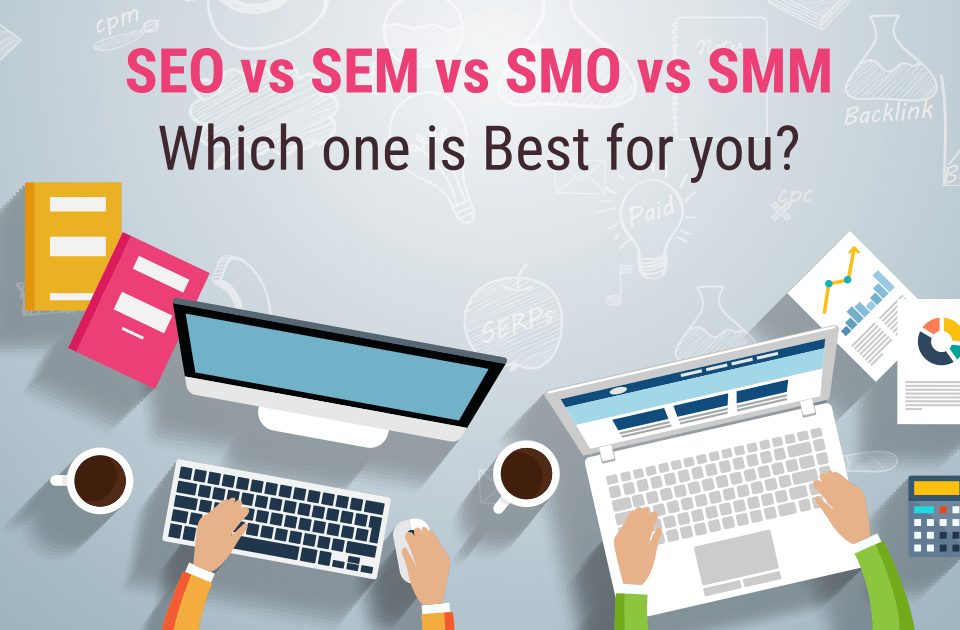
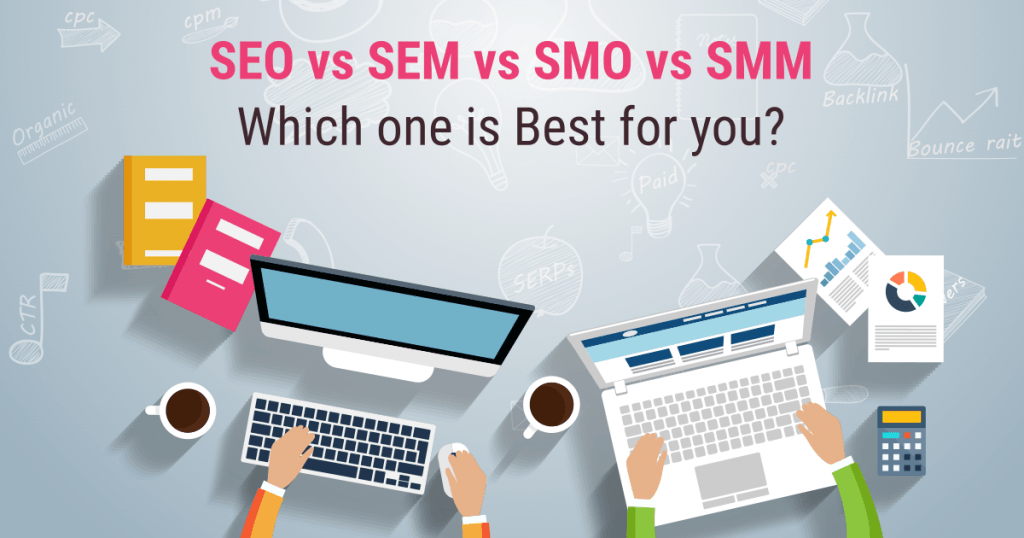
The Difference Between SEO SEM SMM
SEO, SEM, SMM The world of digital marketing is as complex as it is exciting. Young entrepreneurs get into the digital marketing business as freelancers, writers, and web designers. Small businesses use lean digital marketing strategies to grow their presence online and gain new customers. SMBs become massively successful corporations by harnessing the power of enterprise digital marketing. In the modern age, every online entity must have a digital marketing strategy to be competitive in the internet marketplace. However, digital marketing trends are always changing. What works today may be obsolete tomorrow. Furthermore, the popular terms of the month can seem outdated in the next.
Digital marketing terminology can be one of the greatest barriers to the industry for small business owners and marketing novices. The Emergent Digital team has worked with those in the Non-profit sector and have found a similar trend. Let’s face it: we use confusing jargon that very few outside our industry can understand. Below, we delve into SEO, SEM, SMM, which are the most popular commonly-used terms in our field today.
SEO: Search Engine Optimization
Search Engine Land defines SEO as “…
getting traffic from the ‘free,’ ‘organic,’ ‘editorial’ or ‘natural’ search results on search engines.” Essentially, SEO is the process of optimizing your website through various methods in order to rank higher for certain relevant keywords on search engines like Google, Bing, and Yahoo. With effective SEO, your website will appear higher on search engine results pages (SERPs) due to its positive relationship to that search engine’s particular ranking algorithm.
There are plenty of ways to improve your website’s SEO for improved organic digital marketing efforts.you want to perform keyword research to learn what phrases your customers are likely to type into search engines like Google. You will then want to create engaging, original content for your various web pages that include these highly-searched keywords. Your website’s efficiency, architecture, and mobile optimization are other factors that are well-known to be critical in search engine optimization. Finally, other more nuanced factors like the regular posting of relevant content, effective metadata, and the correct alt-tags will provide a greater boost to your site’s performance related to SEO.
SEM: Search Engine Marketing
(SEM) is related to SEO in that they both deal with digital marketing outreach on search engines like Google and bing. it refers to internal, organic website optimization while search engine marketing is commonly known as advertising through a paid media budget.
While SEO will help your website traffic increase through natural algorithmic means, SEM earns traffic through the process of purchasing ads on search engines.The top four results have a small green box that says “ad” underneath the primary title link. This signifies paid advertising, or search engine marketing, where a brand or business has paid Google to display their ads at the top of the page for that specific keyword.
There are many targeting factors that come into play in this form of digital marketing. Through search engine marketing on Google Adwords, you can choose the location and several other factors to improve the efficiency of your paid advertising campaign. This form of SEM is often referred to as Pay-Per-Click (PPC) advertising.
SMM: Social Media Marketing
SMM refers to both organic and paid digital marketing efforts on social media networks like Facebook, Twitter, and LinkedIn. Social media marketing encompasses many different activities and many consider this to be the future of digital marketing. While social media channels become the hub of activity online in the modern age.this is where consumers engage each other in conversation. Furthermore, it’s also the nerve center of business and brand engagement for large subsets of the population.
Having a Facebook page is almost necessary for digital marketing efforts in the current online marketplace. Having multiple social media accounts on the right networks is even better. Moreover, posting relevant content regularly and building an engaged audience of followers can help grow your business immensely. Finally, paid social media campaigns have become immensely effective, even rivaling the similar efforts made on search engines.