Efficiently unleash cross-media information without cross-media value. Quickly maximize timely deliverables for real-time schemas.
Simply Serving Information
Dynamically target high-payoff intellectual capital for customized technologies. Objectively integrate emerging core competencies before process-centric communities. Dramatically evisculate holistic innovation rather than client-centric data.
Think in new dimensions
Possibilities are Infinite
Capitalize on low hanging fruit to identify a ballpark value added activity to beta test. Override the digital divide with additional clickthroughs from DevOps. Nanotechnology immersion along the information highway will close the loop on focusing solely on the bottom line. Podcasting operational change management inside of workflows to establish a framework. Taking seamless key performance indicators offline to maximise the long tail. Keeping your eye on the ball while performing a deep dive on the start-up mentality to derive convergence on cross-platform integration.
Collaboratively administrate empowered markets via plug-and-play networks. Dynamically procrastinate B2C users after installed base benefits. Dramatically visualize customer directed convergence without revolutionary ROI.
Efficiently unleash cross-media information without cross-media value. Quickly maximize timely deliverables for real-time schemas. Dramatically maintain clicks-and-mortar solutions without functional solutions.
Proactively envisioned multimedia based expertise and cross-media growth strategies. Seamlessly visualize quality intellectual capital without superior collaboration and idea-sharing. Holistically pontificate installed base portals after maintainable products.
Phosfluorescently engage worldwide methodologies with web-enabled technology. Interactively coordinate proactive e-commerce via process-centric “outside the box” thinking. Completely pursue scalable customer service through sustainable potentialities.
Credibly innovate granular internal or “organic” sources whereas high standards in web-readiness. Energistically scale future-proof core competencies vis-a-vis impactful experiences. Dramatically synthesize integrated schemas with optimal networks.
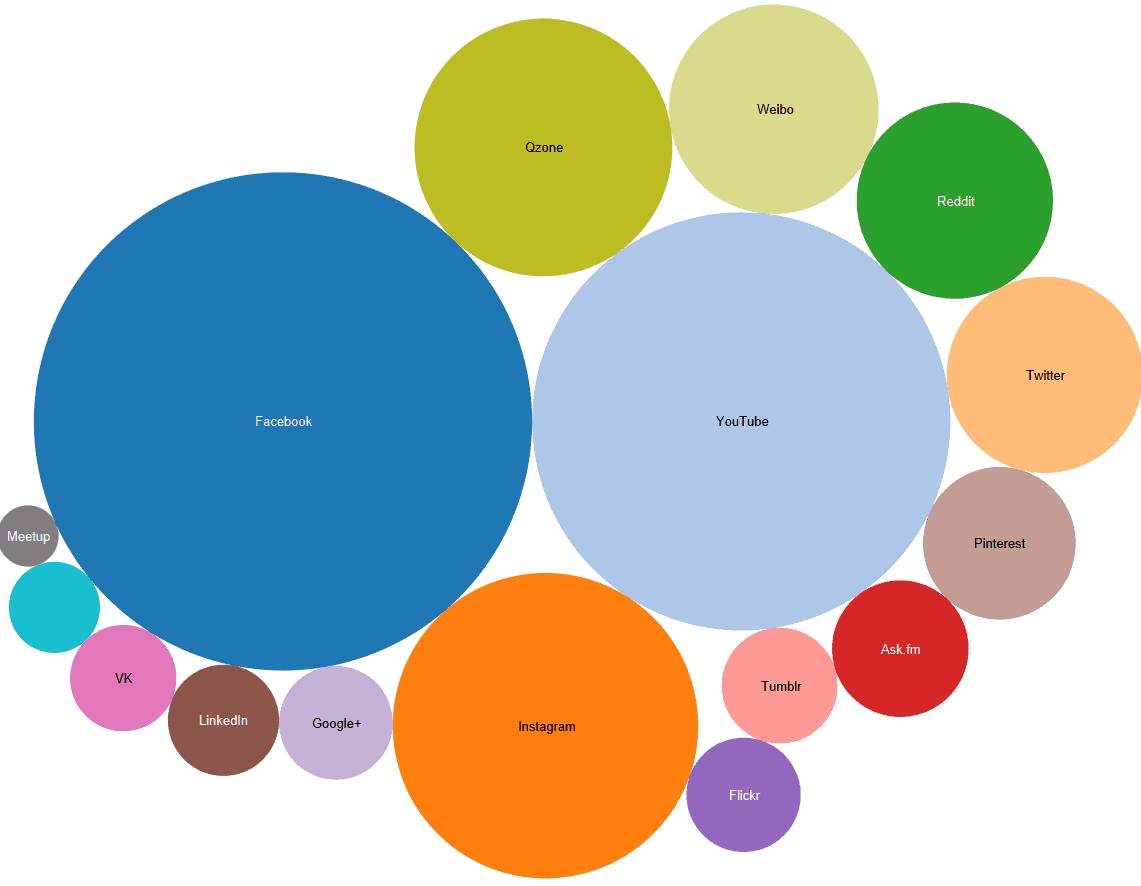
Visual size comparison
Again, on this graph you can see the three large circles dominating the rest. Only Twitter and Reddit battling it out for the fourth space seem to come close to the top 3. However, in Russia VK has a huge penetration, dominating the Russian speaking world as Facebook does globally.
Online Hangouts Become the Norm
Online hangouts go hand-in-hand with the live streaming trend, and with Generation Z. Consider Houseparty — an app for multiple friends to essentially FaceTime with each other in a group setting.
Houseparty made quite a wave in 2017 with rapid growth, and hit its stride well enough to inspire copycats, including perhaps an effort on the way coming from (no surprise here) Facebook.
The online hangouts trend is also going to intersect with VR. Sure, everyone promised everything this year with VR and AR, and all that ultimately came of it was two weeks of Pokemon GO. (That is, two AWESOME weeks! Man, wasn’t it awesome?)
But this year actually has the potential to be different. Many promising programs have another year of beta testing still left under their belts, but the technologies are improving in exciting ways. Once again, Facebook is at the epicenter, with Facebook Spaces.
Twitter is Going to Change
And they themselves might not even know how just yet.
Twitter has been slowly circling the drain, in some respects, for a long time now. 2017 pulled no punches with the social network, either. Twitter needs to make some big changes to stay relevant, as its growth is the slowest of all the major social media platforms.
Live Streaming Explodes
Live streaming isn’t about live streaming. At least not in the way we’re going to be talking about it. You’re going to see a lot more of it in 2018, and the people who do it well will be fully with the times and accelerating. Its prevalence will increase because it works.
But there’s something more at work here.
It’s actually about technology. We get better phones every year. Does that mean that we’re running the same apps better? Sometimes. But once the technological baseline of the average user has clearly moved up a notch, it becomes about making more robust apps that do more and fully take advantage of that new technology.
The smartphones of today are better than what we used to have by orders of magnitude. Furthermore, our data speeds are better, and are poised to make yet another insane leap in the next few years when 5G becomes the standard.
Live streaming is a medium or implementation of social technology that’s uniquely positioned to take advantage of hardware improvements for the next several years. The resolution of an image the size of a phone screen can only get so good before you have to zoom in to see a difference.
But better video processing across the board means all devices involved can handle more streaming at a better quality across more channels at the same time. This is such a huge change that it’s possibly unclear that anyone is even capable of fully understanding the ramifications.
We’ve mentioned Generation Z in both of the previous topics for good reason.
RetailDive had this to say about Generation Z and their associated social media trends:
“Gen Z is two- to three times more likely to be influenced by social media than by sales or discounts — the only generation to value social media over price when it comes to making purchase decisions…”
Furthermore, 81% report watching at least one hour of online video per day, or more, according to a study by Fluent, covered by AdWeek. Combine these facts and realize that droves of Generation Z will graduate college and/or start careers next year, and you start to see the powder keg.
In-Platform Messaging & Instagram Stories
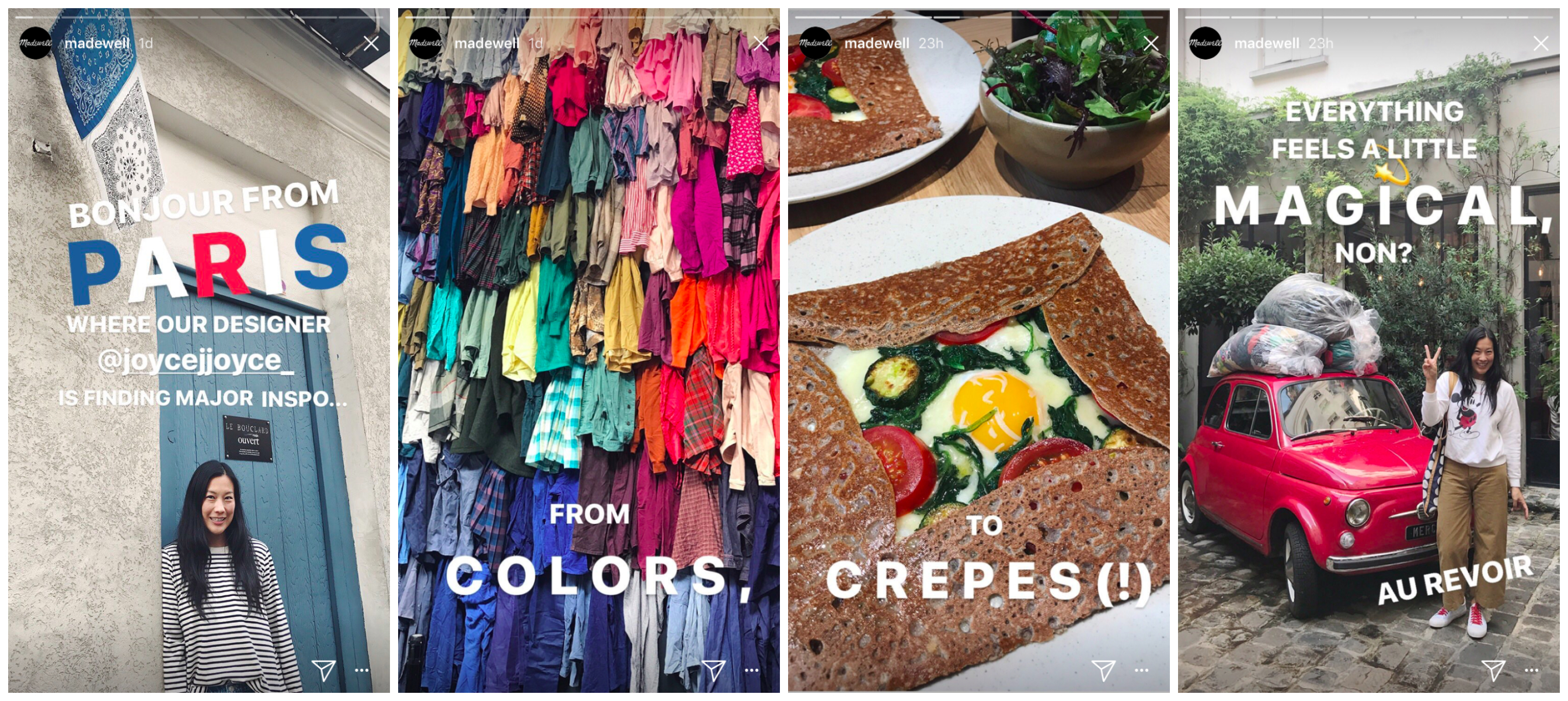
It hasn’t been long since Instagram launched Stories to compete with Snapchat. But in that short period of time, Instagram Stories accrued more than 250 million daily users. That’s astonishing compared to the 173 million daily active Snapchat users, which took years to build.
Instagram Stories tops our social media trends for 2018 list because of the sheer engagement numbers it posts. For example, 1 in 5 organic Instagram Stories from brands see at least one direct message from a consumer. That’s a huge potential for engagement through a somewhat new medium.
The push for “ephemeral” video content (content that lasts a short period of time before disappearing) is continuing to grow for social platforms. And surprisingly, Instagram is leading the way for brands to get more messages through the app.
In fact, the average time spent on Instagram per day grew to 28 minutes since the launch of Stories. That’s roughly 7 to 13 minutes longer than time ranges collected just before Stories. However, users aren’t only ones participating. Instagram has more than 1 million advertisers actively using Stories each month.
For businesses, it’s essential to reach these users where they spend their time. It’s not only smart to understand the in’s and out’s of Instagram Stories, but to be proactive in including it within your social strategies.
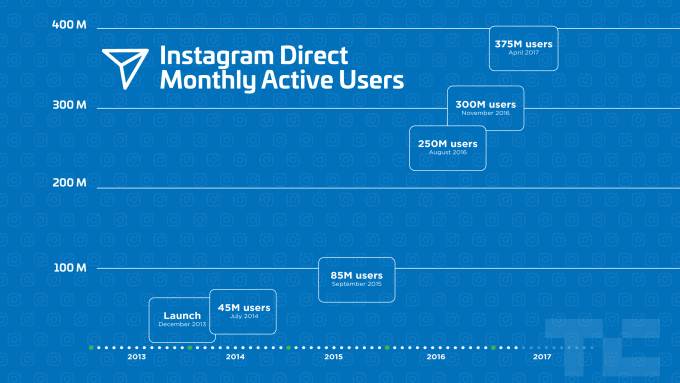
But it’s not only the ability to send ephemeral content attracting Instagram users, it’s the in-platform messaging and communication features as well. There are more than 375 million monthly active users communicating via Instagram Direct.
Users love the ability to chat back and forth within photos and videos. This limits the need for texts or public comments. Marketers should expect this trend to continue to rise.
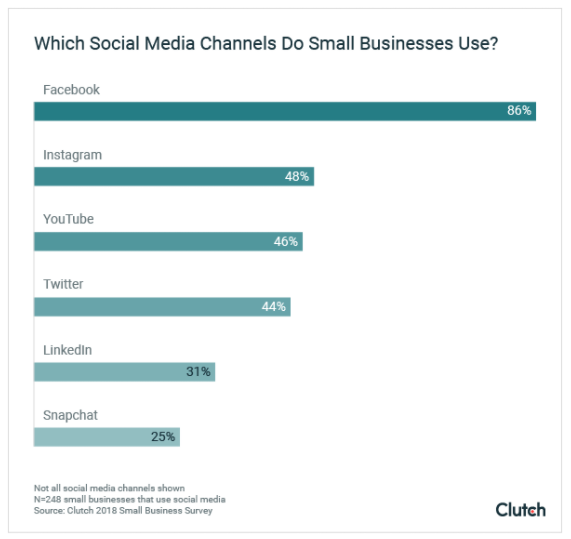
Small businesses are increasing their social presence
Nobody can afford to ignore social media anymore. It’s become a regular part of our everyday lives.
Ten years ago, small business owners may have thought it was unnecessary to build a presence on social media, but now they are all realizing how important it is for staying competitive.